RoNZ Furniture Hospital Phone: 027 487 1152 // 06 374 8132
What commercial furniture has to do
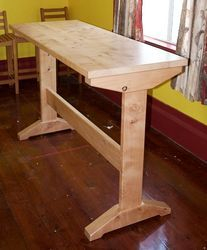
Commercial furniture has a harder job than domestic work. A restaurant table is wiped down hundreds of times a week. A leaner takes leaning, bags and glassware. A shop counter or office piece has to stay square, cleanable and presentable under public use.
Looks still matter. Longevity matters more. The piece has to earn its keep.
Materials chosen for the room they will live in
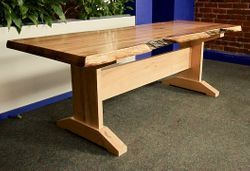
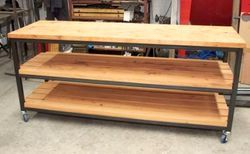
A rimu slab on a macrocarpa base can give a dining room character; it also has to take a commercial floor finish so staff can keep it clean. Metal bases with timber tops suit an industrial look and take the abuse of a busy floor. The timber is still chosen board by board — colour, grain, stability — because a commercial piece that looks tired after two seasons is a failed piece, however cheap it was to buy.
Build for load, cleaning and repair
Joints and frames are sized for real loads, not for a catalogue photo. Edges are detailed so they do not chip at the first knock. Finishes are specified for the environment — a Resene flooring-type coating on a restaurant top is a different decision from an oil on a domestic table. If something wears, it should be possible to refinish or replace a component without discarding the whole piece.
The same craft, a different brief
The standards do not drop because the client is a café rather than a household. Grain matching, honest joinery and care in the places customers never look still apply. The difference is the brief: more cycles of use, stricter hygiene, and a piece that has to look considered at 9pm on a Saturday as well as at opening time.
Good commercial furniture should still be in service — and still worth looking at — when the fit-out around it is due for a refresh.